
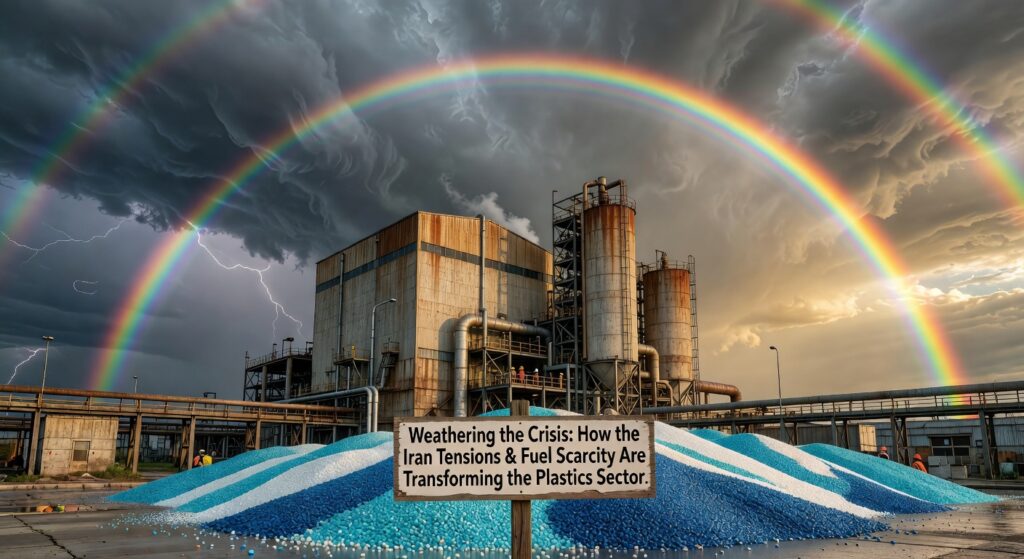
As the second quarter of 2026 unfolds, the plastics manufacturing world is grappling with its most severe supply chain disruption since the 2020 pandemic. Rising tensions in Iran and the ensuing disturbances in the Strait of Hormuz have sent ripples through petrochemical markets worldwide. For injection moulding businesses, this isn’t just a headline — it’s a tangible threat to raw materials, pricing stability, and delivery schedules.
In this analysis, we break down how today’s geopolitical tensions are impacting plastics producers and what strategies can help manufacturers adapt and remain competitive.
1. Rising Resin Costs and Feedstock Shortages
The Strait of Hormuz is one of the world’s most critical maritime chokepoints, accounting for approximately 20% of global oil traffic and a substantial portion of Middle Eastern petrochemical exports. As geopolitical conflict restricts passage through this corridor, essential feedstocks — including naphtha, ethylene, and propylene — are becoming increasingly scarce on global markets.
What This Means for Plastics Manufacturers:
- Major commodity plastics such as Polyethylene (PE) and Polypropylene (PP) have experienced double-digit price increases, with some reports indicating surges of 37% to 38% in March 2026 alone.
- A growing number of resin suppliers are issuing force majeure notices, resulting in delayed or significantly reduced deliveries of raw materials.
- Procurement teams face mounting pressure to secure alternative sources at speed, often at a significant premium.
For manufacturers operating on tight margins, these price movements translate directly into eroded profitability — unless immediate action is taken.
2. Supply Chain Disruptions and Just-in-Time Systems Under Pressure
Many Asian and Australian injection moulding manufacturers that depend on just-in-time (JIT) inventory models are now reporting only a few weeks’ worth of polymer stock remaining. Shipping lane disruptions have compelled freight carriers to reroute around conflict zones, adding significant distance, time, and cost to global logistics networks.
Key Supply Chain Impacts:
- Freight costs have risen by 40% to 70% across major trade routes, squeezing logistics budgets for manufacturers and distributors alike.
- Raw material lead times are stretching from the typical 2–4 weeks to multiple months in some cases, severely complicating production planning and scheduling.
- Should the conflict persist, some manufacturers may face the difficult decision to reduce production capacity or temporarily halt operations.
The fragility of JIT systems in the face of geopolitical disruption is now starkly apparent. Businesses that have not diversified their supply chains or built safety stock buffers are especially vulnerable.
3. Increasing Operational Expenses Across the Board
Beyond raw material costs, the energy-intensive nature of injection moulding means that rising global fuel prices are creating a second wave of financial pressure. Higher electricity bills and increased logistics costs are compounding the impact of feedstock shortages, squeezing profit margins at every stage of the value chain.
The Knock-On Effect:
- Elevated energy and logistics expenses are being passed along supply chains, raising the overall cost of finished plastic components for end customers.
- Manufacturers with fixed-price contracts are absorbing costs that were not anticipated at the time of agreement.
- Customer price negotiations are becoming more frequent and more difficult as transparency around cost pressures increases.
In this environment, operational efficiency is no longer a competitive advantage — it is a survival imperative.
Our Strategies for Navigating the Crisis
In response to these turbulent market conditions, forward-thinking plastics manufacturers are implementing a range of contingency measures. Here is what we are actively doing — and what the broader industry should consider:
Diversifying Supply Sources
Relying on a single geographic region or supplier for critical resin supply is a risk that today’s environment makes untenable. We are actively exploring alternative resin suppliers outside the Middle East, with a focus on North American and European sources, to ensure continuity of supply and reduce single-point-of-failure exposure.
Improving Material Efficiency
Our engineering teams are working closely with clients to optimise product designs for material conservation. This includes evaluating opportunities for wall thickness reduction, redesigning components to minimise material use without compromising performance, and exploring material substitution where appropriate. In a high-cost resin environment, design efficiency is a powerful lever.
Incorporating Recycled Materials
The integration of recycled plastics is increasingly being recognised not merely as a sustainability measure, but as a strategic buffer against virgin resin price volatility. Recycled materials are less directly exposed to oil price movements, offering a degree of cost stability that virgin polymers cannot currently provide. We are expanding our use of high-quality recycled resins across suitable product lines.
Maintaining Clear Client Communication
Transparency is critical in periods of supply chain uncertainty. We maintain open, proactive dialogue with all clients regarding material availability, lead time changes, and pricing movements. Setting realistic expectations early — rather than over-promising and under-delivering — protects relationships and enables collaborative problem-solving.
Industry Outlook: What to Expect Through the Rest of 2026
Industry experts caution that even if geopolitical tensions ease promptly, supply chain normalisation is unlikely to happen overnight. The process of restoring feedstock flows, rebuilding inventory buffers, and stabilising freight lanes typically takes months — not weeks.
Plastics manufacturers should therefore brace for:
- Sustained elevated resin prices through at least the third quarter of 2026
- Continued volatility in freight costs and delivery lead times
- Ongoing pressure to reduce material consumption and explore alternative materials
- Increased customer scrutiny of pricing and supply reliability
The businesses that will emerge strongest from this period are those that treat the current disruption not as a temporary inconvenience, but as a catalyst for building more resilient, diversified, and efficient supply chains.
Final Thoughts
The Iran tensions and Strait of Hormuz disruptions of 2026 represent a genuine inflection point for the global plastics and injection moulding sector. Rising resin costs, supply chain fragility, and escalating operational expenses are creating a challenging environment — but also an opportunity for manufacturers willing to adapt.
Our commitment remains firm: to guide our clients through these challenges with strategic sourcing, transparent communication, and proactive planning. The road ahead requires flexibility, innovation, and resilience — qualities that define the best in our industry.